
What Is a Food Desert?
The USDA defines a food desert as a low-income census tract where a substantial number of residents have low access to a supermarket or large grocery store. In urban areas, “low access” means living more than one mile from the nearest healthy food source without reliable transportation.
But the numbers only tell part of the story. The lived experience — the daily decision between buying fresh produce or keeping the lights on, the exhaustion of two bus transfers just to reach a supermarket, the shame children feel when their lunch looks different from their classmates — this is what drives Urban Transformation Network’s work.
The Systemic Roots of Food Inequity
Food deserts didn’t happen by accident. Decades of redlining, disinvestment, and discriminatory zoning policies concentrated poverty in certain neighborhoods while routing economic development elsewhere. Supermarket chains followed the money, leaving behind communities that needed them most.
Understanding this history is essential to solving the problem. Surface-level solutions — a food bank here, a mobile pantry there — cannot address a structural failure that has been decades in the making.
A Systems-Based Approach
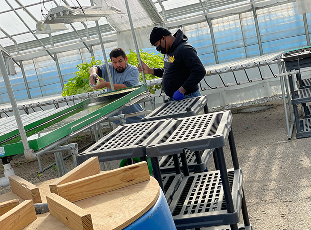
At Urban Transformation Network, we believe real change requires building infrastructure within communities — not just delivering resources to them. Our Metro Farms initiative grows fresh produce locally, creating both food access and economic opportunity in the same neighborhoods that have historically been left behind.
“When you change what a community eats, you change how it functions. Health, focus, productivity — everything improves when people have access to real food.” — UTN Program Director
The path forward requires sustained investment, community trust, and a long-term vision. We are committed to all three.